
Spring is a season of fresh air, blooming flowers, and new growth—one that invites us and our pets outdoors more often. As gardens come back to life and homes fill with greenery, it’s also an important time for pet parents to be aware of plants that can be harmful to dogs and cats. Curious noses and playful chewing are common in spring, making plant safety especially important this time of year.
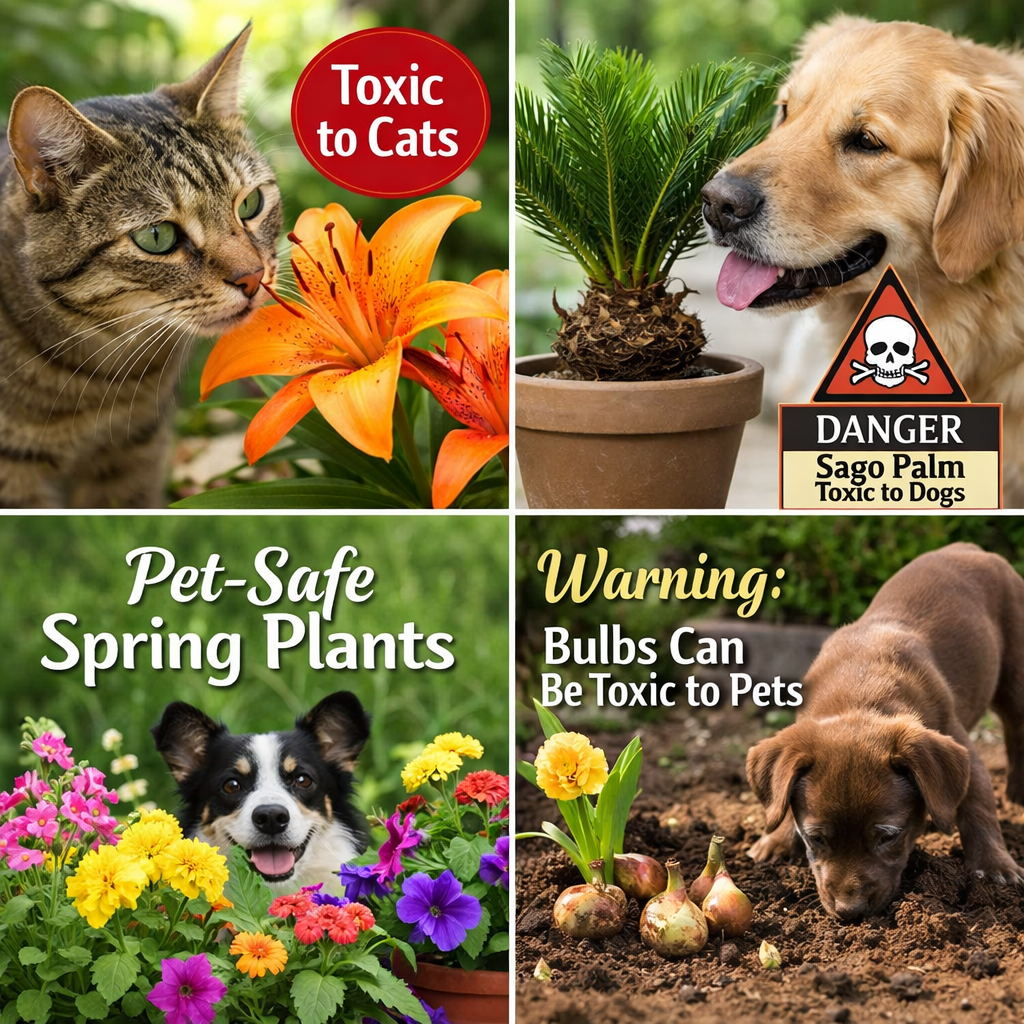
One of the most dangerous spring plants for pets is lilies. Often used in floral arrangements and Easter décor, many lily varieties are extremely toxic to cats. Even small exposure—such as licking pollen from their fur or drinking water from a vase—can lead to serious kidney failure. Cat households should avoid lilies altogether.
Another common spring landscaping plant to watch for is the sago palm. Popular in warmer climates, this plant is highly toxic to dogs. The seeds are particularly dangerous and can cause vomiting, liver failure, seizures, and in severe cases, death.
Spring houseplant refreshes can also introduce risk. Plants like pothos, philodendron, dieffenbachia (dumb cane), and snake plants are frequently added to homes this season. If chewed, they can cause mouth irritation, drooling, vomiting, and digestive upset. While reactions are often mild, they’re still uncomfortable for pets.
Outdoor gardens bloom with beauty in spring—but not all flowers are pet-safe. Oleander, azaleas, rhododendrons, and foxglove are highly toxic and can affect the heart and nervous system. Even a small nibble can lead to serious symptoms.
Spring yard care brings another hidden risk: fertilizers, pesticides, and mulch. Cocoa mulch, in particular, smells appealing to dogs but contains compounds similar to chocolate and can be toxic if ingested.
If you suspect your pet has ingested a toxic plant, contact your veterinarian or a pet poison helpline immediately. Acting quickly can make all the difference.
Spring Plants That Are Safer for Pets
The good news is that not all spring plants are off-limits for pet households. Many popular flowers and greenery can be enjoyed safely with a little planning. Pet-safe spring blooms include snapdragons, petunias, pansies, marigolds, sunflowers, and zinnias. These plants add seasonal color to gardens and patios without posing a risk if curious pets get a little too close.
For greenery, plants like Boston ferns, areca palms, spider plants, and prayer plants are generally considered safe for both dogs and cats. These are great options for refreshing your home during spring without worrying about accidental nibbling.
Are Spring Bulbs Safe for Pets?
When it comes to bulbs, extra caution is needed. Many spring bulbs are toxic, especially if dug up and chewed. Bulbs such as tulips, daffodils, hyacinths, crocus, and irises can cause vomiting, drooling, diarrhea, and in some cases more serious symptoms. The bulb itself is the most toxic part of the plant, and dogs are particularly at risk because they love to dig.
If you enjoy bulb plants, consider planting them in areas your pets can’t access, using raised planters, or choosing alternatives grown from seed instead of bulbs. Supervision during spring yard time is also important, especially for puppies and curious diggers.
A Simple Spring Safety Tip
Even with pet-safe plants, it’s best to discourage chewing whenever possible. Keep an eye on new plantings, rinse off fertilizers or treatments, and provide plenty of toys and enrichment so plants don’t become a temptation.
With thoughtful plant choices and a little awareness, spring can be a beautiful—and safe—season for pets to explore and enjoy.
At The Ranch Pet Resort and Spa, we’re especially mindful during springtime, ensuring our grounds remain safe as pets enjoy the season. With a little awareness, spring can be a joyful, worry-free time for both you and your furry companions.